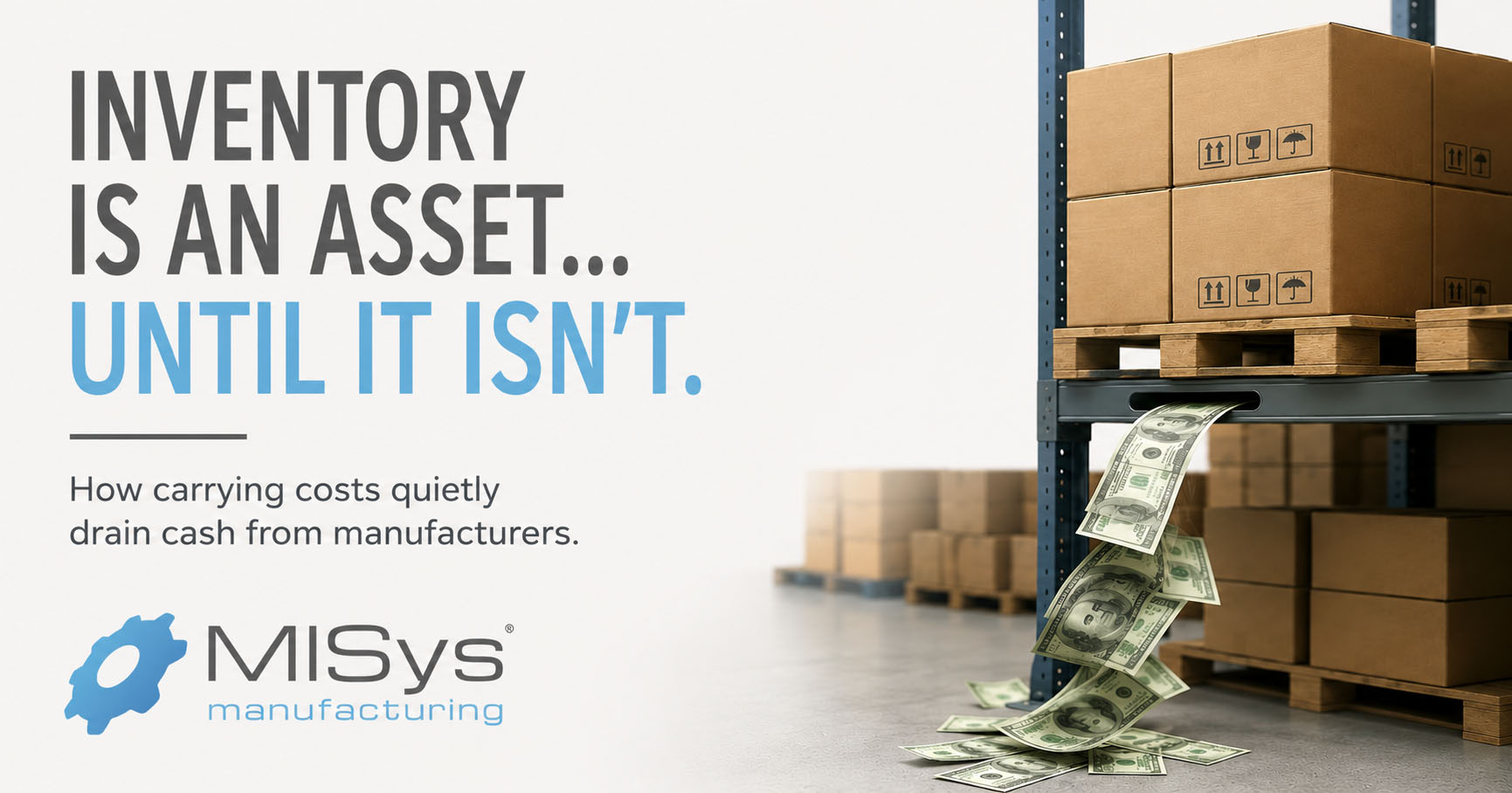
How Inventory Carrying Costs Quietly Drain Cash from Small Manufacturers
For many manufacturers, inventory is one of the largest assets on the balance sheet.
Yet surprisingly few know its true value at any given moment.
Some rely on annual physical counts. Others estimate inventory between audits. Many know how much material is on the shelf but have little confidence in its true value. That uncertainty affects far more than accounting. It impacts profitability, purchasing, cash flow, and production planning.
That uncertainty affects far more than accounting.
Without accurate inventory values, it's difficult to understand profitability, control purchasing, reduce carrying costs, plan production, or make informed business decisions.
Why Inventory Value Matters
Accurate inventory valuation affects nearly every part of a manufacturing business, including:
- Financial statements
- Taxes
- Cost of Goods Sold (COGS)
- Purchasing decisions
- Production planning
- Cash flow
- Profitability
Simply put, you need to know how much cash is sitting on your shelves.
Inventory Is More Than an Asset
Inventory is an asset, but it's also one of the largest ongoing expenses many manufacturers carry.
Inventory carrying costs are commonly estimated at 10% to 30% of inventory value each year. In our experience working with manufacturers, we've seen actual carrying costs range anywhere from 10% to 50%, depending on warehousing, financing, insurance, obsolescence, shrinkage, and the cash tied up sitting on the shelf.
Consider a manufacturer carrying $1 million in inventory.
At a 30% annual carrying cost, that's $300,000 every year just to own that inventory. At 50%, the cost grows to $500,000 annually.
Suddenly, excess inventory isn't just an asset, it's quietly draining profit.
Perpetual Inventory vs. Periodic Counts
Many manufacturers still depend on annual physical inventories to determine inventory value.
While physical counts remain important, they shouldn't be the only time you know what your inventory is worth.
A perpetual inventory system continuously updates inventory as materials are purchased, received, consumed, manufactured, and shipped. Combined with routine cycle counting, it provides an accurate inventory valuation throughout the year.
Instead of waiting until year-end, you always know where you stand.
Better Information Leads to Better Decisions
When inventory values are accurate, manufacturers can:
- Buy only what they need.
- Reduce excess inventory.
- Eliminate shortages.
- Improve inventory turns.
- Increase inventory accuracy.
- Produce more reliable financial statements.
- Make purchasing decisions with confidence.
Accurate inventory isn't just about accounting.
It's about making better business decisions every day.
How MISys Manufacturing Helps
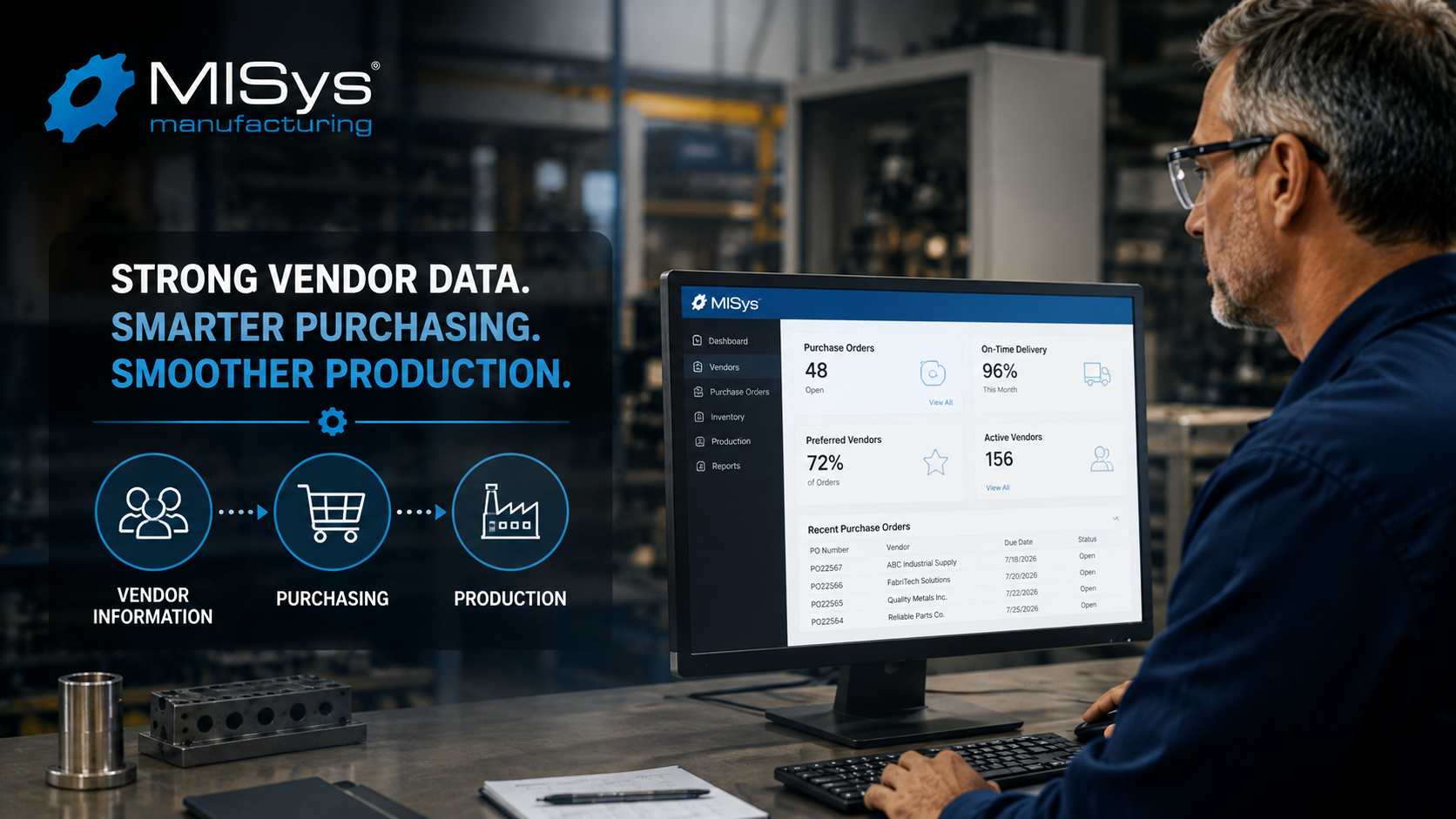
MISys Manufacturing integrates directly with QuickBooks and Sage accounting software to provide real-time inventory visibility and accurate inventory valuation.
As inventory is purchased, consumed, manufactured, and shipped, quantities and costs are continuously updated, giving manufacturers the information they need to manage inventory with confidence.
Whether you're preparing financial statements, planning production, reducing inventory carrying costs, or improving cash flow, accurate inventory data helps you make smarter decisions.
Because when you know what your inventory is really worth, you gain far more than an accounting number. You gain control over your manufacturing business.