Sometimes the smartest investment isn't the biggest one.
If you've been researching manufacturing software, you've probably heard the same advice:
"It's time to move to ERP."
Maybe it is.
But maybe it isn't.
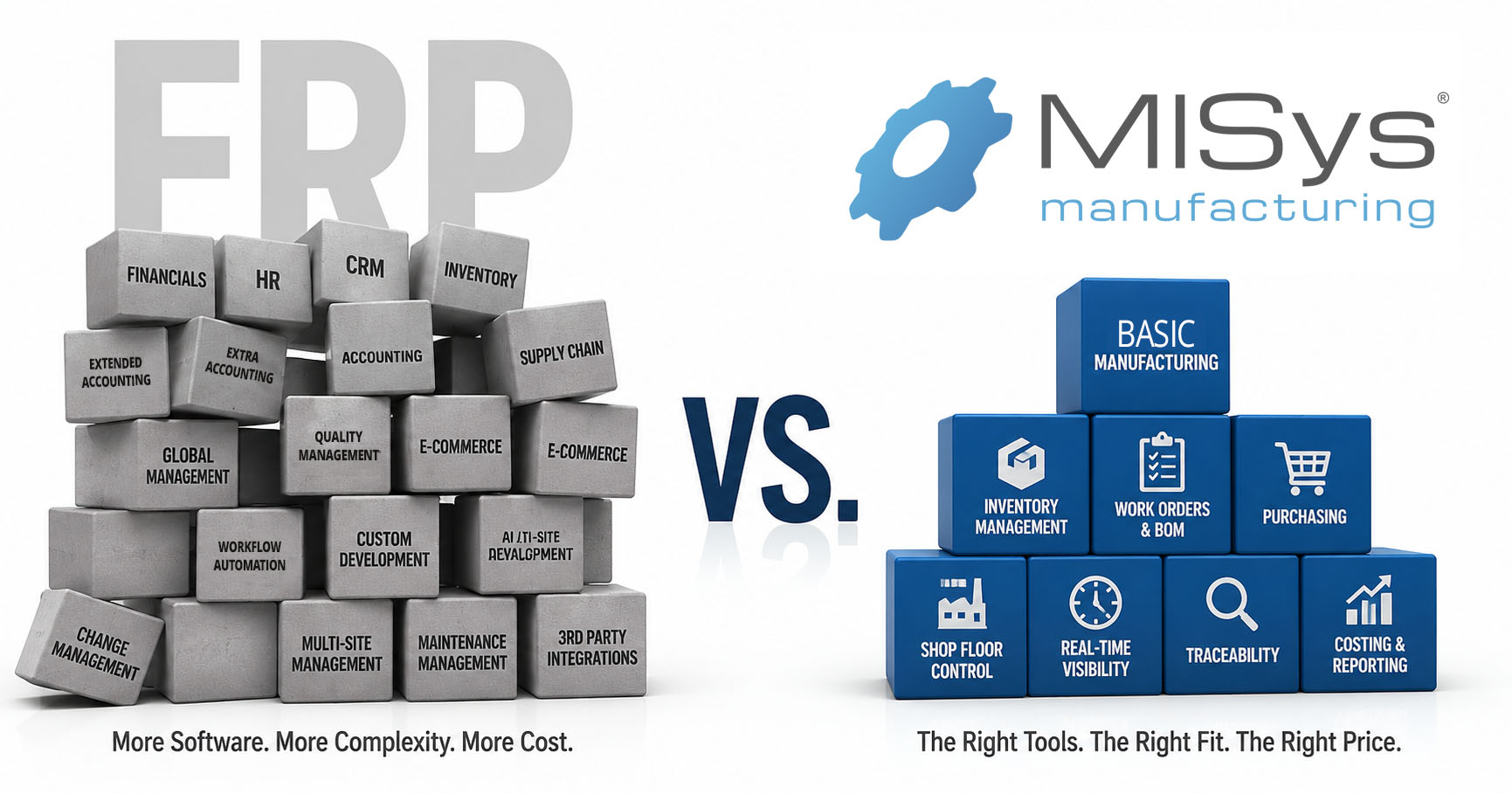
For many small and mid-sized manufacturers, a full ERP system solves problems they don't actually have—while creating new ones they never wanted.
The ERP Price Tag Is Only the Beginning
The annual subscription might start around $30,000.
Then comes implementation.
It's not unusual to spend another $60,000 to $150,000 getting the system configured, training employees, migrating data, and integrating third-party applications.
Need CRM? Another connector.
Shipping software? Another connector.
Quality management? Another connector.
Reporting? Another connector.
Before long, you've built an expensive technology stack that requires significant time, money, and outside consultants just to keep everything working together.
Bigger Doesn't Always Mean Better
Most manufacturers don't wake up wishing for a more complicated software system.
They want to:
- Know what's in inventory.
- Build products on time.
- Purchase materials efficiently.
- Eliminate spreadsheets.
- See accurate costs.
- Deliver orders when promised.
If your accounting system already handles accounting well, why replace it?
Instead, add the manufacturing capabilities you're missing.
That's exactly where MISys fits.
Buy What You Need. Not Everything Someone Wants to Sell You
MISys works alongside your accounting software instead of replacing it.
You gain manufacturing functionality like:
- Inventory management
- Bills of Material
- Work Orders
- Material planning
- Purchasing
- Shop floor reporting
- Traceability
- Production scheduling support
Without forcing your entire business onto a new financial platform.
That means:
- Faster implementation
- Lower upfront cost
- Less disruption
- Faster employee adoption
- A significantly lower total cost of ownership
And What Happens Three Years From Now?
Many ERP vendors offer attractive introductory pricing.
Then renewal arrives.
Subscription costs increase.
Support costs increase.
Consulting costs continue.
Switching platforms after years of implementation is rarely realistic.
In many cases, companies stay. Not because they're thrilled, but because leaving would be even more expensive.
That's vendor lock-in.
It's worth considering before signing a long-term agreement.
The Right Tool for the Right Stage
We're not against ERP.
Some manufacturers absolutely need it.
Multi-national operations, highly complex organizations, or companies managing dozens of locations may benefit from an enterprise platform.
But thousands of manufacturers simply need better manufacturing software. Not an enterprise software project.
There's a big difference.
Don't Buy More Software Than Your Business Needs
Manufacturing software should help you control costs, improve visibility, and increase productivity.
It shouldn't become the largest project your company has ever undertaken.
Before investing in an expensive ERP implementation, ask a simple question:
Are you solving your manufacturing challenges—or buying software you'll spend years trying to justify?
Sometimes the smartest move isn't replacing everything.
It's adding exactly what you need.
And nothing you don't.